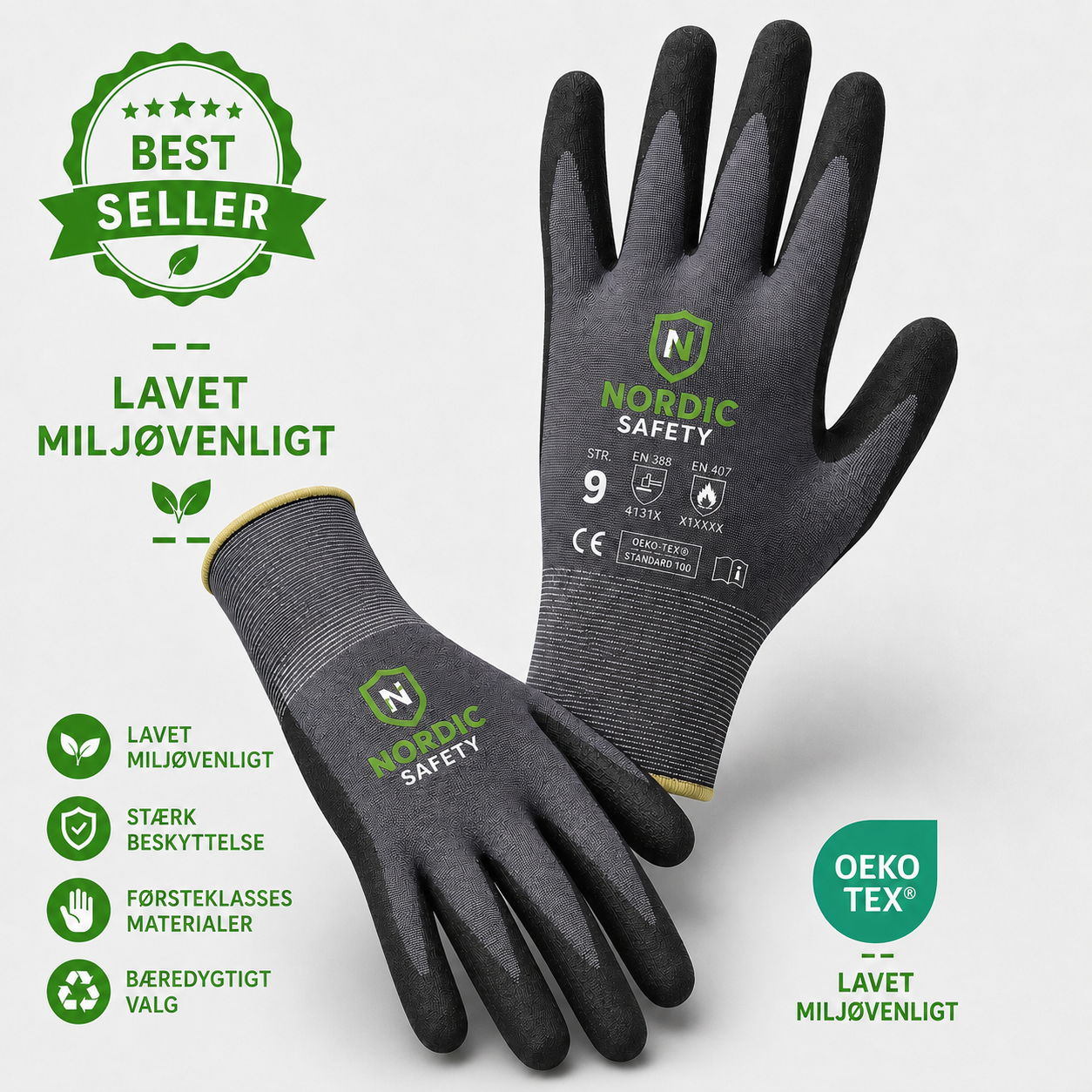

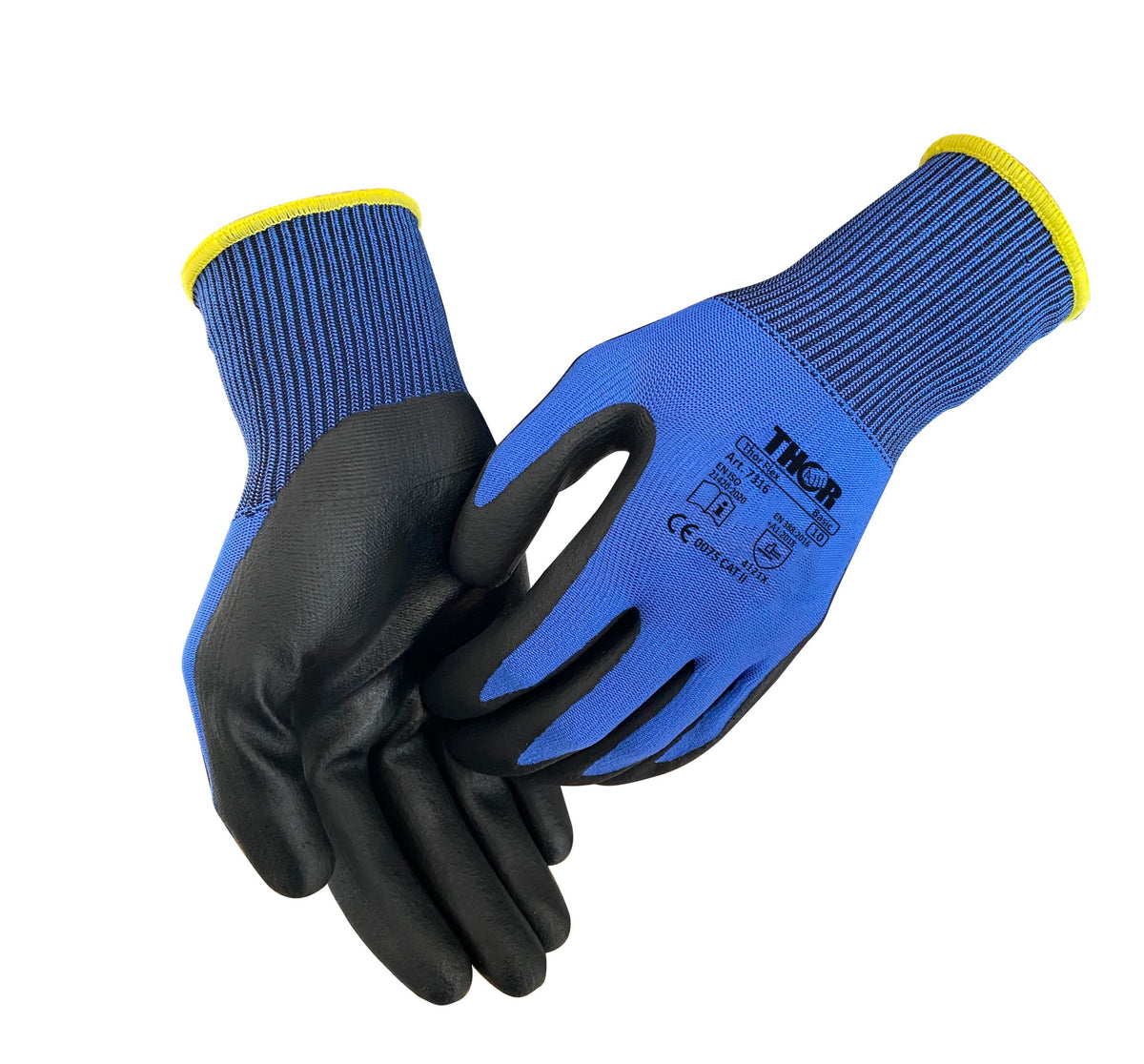
The EN 388 labeling shows results from various tests of mechanical protection. It is not one overall mark for the glove. Read each character separately and compare the result with the work task and the documentation for the exact model.
This guide is about reading the labeling before purchasing. It does not replace the workplace risk assessment and does not set a level of protection for a specific task.
What do the characters in the EN 388 code mean?
Manufacturers Blåkläder and Juba describe the following characteristics and sequence. The level numbers belong to each test; they should not be added together.
- Abrasion: First sign indicates abrasion resistance, with level 1–4.
- Cut with circular knife: Second sign relates to the coupe test, with level 1–5.
- Tearing: Third sign indicates resistance to tearing, with level 1–4.
- Puncture: Fourth character relates to puncture resistance, with level 1–4.
- Straight knife cut: The following letter shows the TDM result according to ISO 13997, from A to F.
- Impact Protection: A trailing P can indicate passed, optional impact test.
What do X and 0 mean?
X is not the same as 0. X is used when no result is given for the test in question. 0 means that the minimum requirement for the lowest level has not been achieved. Check the manufacturer's explanation of the specific marking.
There are two different cut tests. Materials can dull the knife in the coupe test, so the TDM test becomes relevant. A letter from A to F must therefore not be converted directly to a number from the coupe test.
An example of reading – not a product promise
In an illustrative code 4X42C 4 stands for wear, X for no coupe result, 4 for tearing, 2 for puncture and C for TDM cut resistance. The example explains the sequence. It is not a certification of a glove from Nordic Safety.
EN 388 does not in itself document suitability for chemicals, food contact or medical use. Also read the difference between EN 455 and EN ISO 374, if the purchase includes other protection needs.
Make the code usable in the purchase
Our proposal is to save work task, manufacturer, model, item number, the entire marking code and documentation date on the same item card. Note the standard edition the manufacturer refers to. Then a replacement item can be checked against the original basis.
Two models with the same code may still have different fit and function in the work. Therefore, let the users evaluate the size and handling after the necessary protection has been clarified. HSE specifically emphasizes task, user and manufacturer data when choosing gloves.
See work gloves for business, and use our guide to assembly gloves for the practical part of the selection. If the marking is missing on a particular item, ask for the documentation with the item number instead of assuming a level.
Sources
- Blåkläder: tests and levels in EN 388.
- Juba: the sequence in the EN 388 marking. The source is used for the labeling explanation, not for product characteristics at Nordic Safety.
- HSE: selection according to work task, user and manufacturer data.
Choose between active work gloves: PU assembly gloves and Premium Sandy Flex. Check the classification in the individual model's product documentation.
Sources checked 11 October 2026. The product card and code example are editorial aids, not a product endorsement.